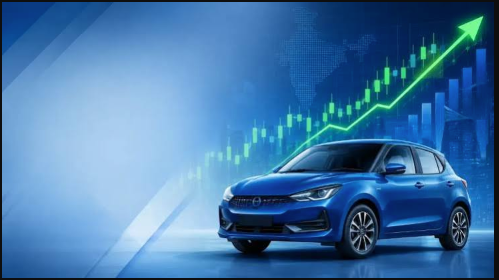

Few themes have captured the imagination of Indian equity investors like the shift toward battery-powered vehicles. Those who track the Tata Motors share price often do so because the company has positioned itself early in the electric passenger segment. Others compare it with the Maruti share price to judge how a dominant petrol and compressed natural gas player might respond to the same transition. The contrast between an early mover and a cautious incumbent makes this one of the most interesting debates in the market today.
India’s Electric Vehicle Opportunity
Electric vehicles still comprise a small fraction of total car sales in India, but their growth trajectory is steep. Rising fuel prices, increased choice of models and awareness of cost savings will encourage more and more urban families to purchase one for their second car for commuting within the city. Fleet operators and partners in the taxi pooling space also experiment because they stand to benefit from reduced costs in fuel and maintenance that increase their earnings per trip.
Two-wheelers and three-wheelers have had a significant penetration of electrification already, which provides a useful pointer for the auto sector. The question for investors is not whether adoption will rise, but rather how quickly it will happen, and how much value will accrue to each manufacturer. The learning curve benefits manufacturers early on in terms of battery management and service offerings, but requires heavy investment upfront, which can hurt short-term profitability.
Batteries and Charging Infrastructure
The battery pack is the most expensive component in an electric vehicle, and comprises a significant portion of its cost. While prices of cells have come down over time, the rate is dependent on the supply of raw materials as well as the scale of manufacturing. Manufacturers that have long-term contracts with suppliers or have set up assembly plants in the country have an edge in terms of cost as well as quality control.
Charging infrastructure is another important consideration. Potential buyers will want to know that they have convenient access to charging at home, the office, as well as on highways. Housing societies, charging station providers and even petrol pumps play a role. Manufacturers that have a good relationship with the former and offer home-charging solutions stand to gain from reducing the hesitation of would-be buyers. Investors should pay attention to statements made by manufacturers about the availability, variety and quality of chargers, as it has a direct impact on the lifetime value and purchase decision of the customer.
Policy Support and Local Manufacturing
Policy support from the government has been crucial in boosting sales of electric vehicles. Subsidies on manufacture as well as concessional tax rates, and incentives for setting up manufacturing infrastructure for batteries and other components are all aimed at creating a support ecosystem within the country. For listed manufacturers, this means better returns on large capital expenditures as well as reduced dependence on imports.
However, it is important for investors to understand that policy support is unlikely to be permanent, and they should be wary of companies that rely on such support for a large part of their revenues. Firms that have set up manufacturing units, design vehicles to suit local conditions and price points as well as have good supply chains to support their products will fare better in the long term. Attention should also be paid to announcements of new manufacturing facilities and expansions as well as partnerships, as they point to the company’s resolve and ability to scale in the long term.
What Investors Should Monitor
With such a long-term outlook, a few pointers can help investors monitor the companies in this space better. First and foremost is the adoption rate – the ratio of electric vehicles to overall sales – and whether it is rising consistently. This should be complemented by a look at the profitability of electric vehicles – higher sales without profits will not benefit investors. Finally, capital expenditure budgets should also be analysed for their focus on electric vehicles, including partnerships for platforms and batteries.
While a longer-term viewpoint is necessary for investing in electric vehicles, it is important to keep in mind that technology can become dated, competition can heat up, and consumer preferences can change. Diversifying across manufacturers as well as across sectors is a safer bet than putting all your eggs in one basket.
Long-term investors need patience, but patience is a virtue that is only applicable with due diligence. Meaningful analysis should be done before buying into a company, and investors should also keep an eye on management commentary and compare it to actual numbers quarter after quarter. A SEBI-registered financial adviser can help you make informed decisions based on your risk tolerance.